

New research reveals where people in England can age healthiest, happiest lives
Health Connect is proud to share that our Growing Old Index has been published in The Sunday Times, spotlighting the towns and cities across England that offer the best conditions for people to age well.
The research challenges long-held assumptions about retirement and later life. Rather than remote villages or traditional seaside resorts, the findings show that well-connected towns and cities with strong healthcare access, community infrastructure and social opportunities deliver better physical and mental health outcomes for older people.
Newspapers where our research has been featured


Read the articles that feature our study here:
Express & Star
Time Out
Europe Says link
Express link
The Reading Chronicle link
BBC Radio Berkshire link
Europe Says link
Sunderland Echo link
Newcastle World Coverage link
Chester Nub News link
The Sunday Times (print) link and The Sunday Times online article link
Times Radio link
LBC News link
Where is England best to grow old?
Topping the index is Windsor and Maidenhead, which combines high life expectancy, fast access to orthopaedic services, strong GP provision and positive wellbeing scores. Close behind is Hartlepool, a result that surprised many and underlines a central message of the research: health and happiness are not solely determined by wealth.

Despite being one of the most economically disadvantaged towns in England, Hartlepool ranks second overall thanks to:
- One of the best-performing A&E departments in the country
- Fast access to trauma and orthopaedic services
- A happiness score higher than many affluent southern areas
The wider top rankings also highlight the strength of health services and community life in the North East and Midlands, with towns such as Stockton-on-Tees, Darlington, Gateshead, Sunderland, Solihull and Wolverhampton all featuring prominently.
What the index measures
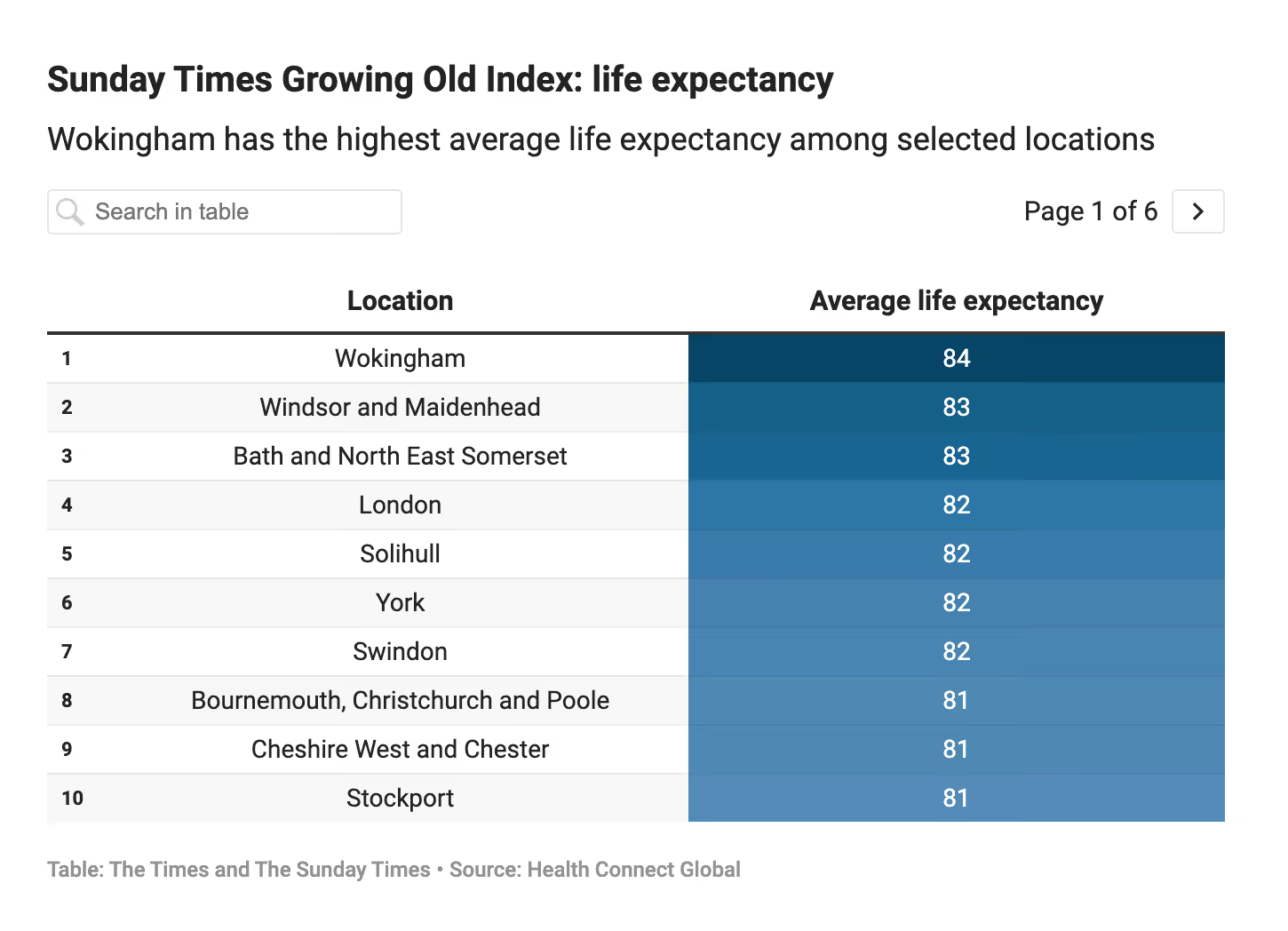
The Health Connect Growing Old Index, created for The Sunday Times, analyses six key indicators across English local authorities:
- Average life expectancy
- GP provision per population
- A&E waiting times
- Referral times for trauma and orthopaedic services
- Availability of care home beds
- Scores from the Office for National Statistics happiness index
The data was drawn from the most recent ONS and NHS datasets, with large local authority areas removed to allow meaningful comparison between towns and cities.
Why this matters
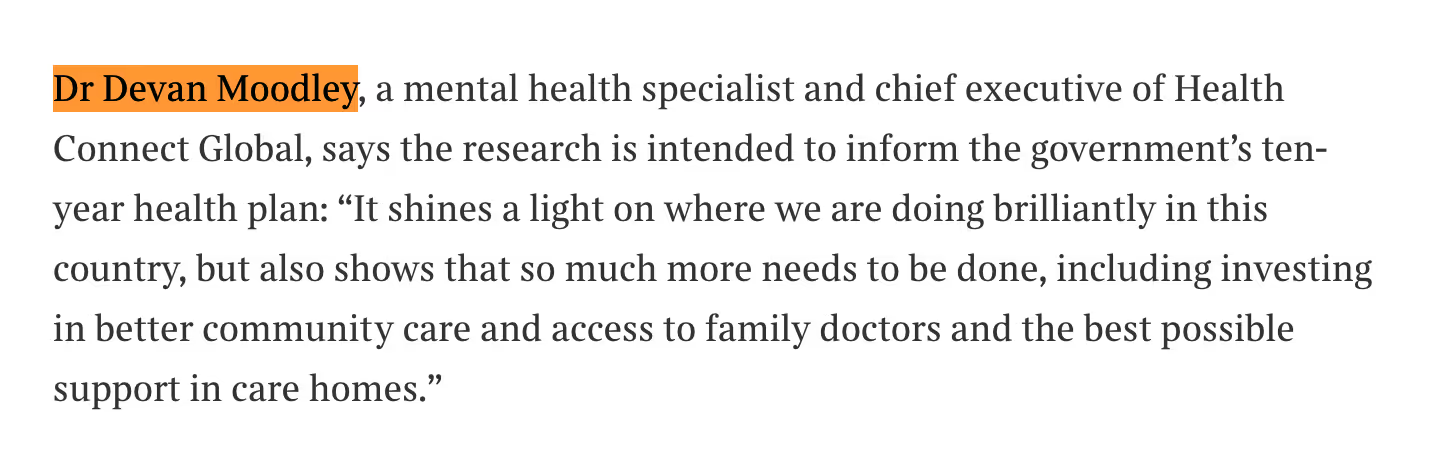
As Devan's shared with the Sunday Times editor that the findings are intended to inform long-term policy decisions:
“This research shines a light on where we are doing brilliantly in this country but also where so much more needs to be done. If we want people to live longer, healthier and happier lives, we must invest in better community care, improved access to family doctors, and the highest possible standards of support in care homes.”
The index reinforces a growing body of evidence that healthy ageing is shaped by systems, not just individual choices from access to timely care, to social connection, walkable communities and responsive local services.
Informing the next decade of health and care
As the government develops its ten-year health plan, the Growing Old Index provides a data-led view of what works and where targeted investment could deliver the greatest impact.
At Health Connect, we believe technology has a critical role to play in:
- Connecting care across community, primary and acute settings
- Reducing administrative burden so professionals can focus on people
- Using real-world data to improve outcomes, not just report on them
The Growing Old Index is one step towards a more transparent, preventative and person-centred approach to ageing in England.
What this means for care providers
The Growing Old Index reinforces what many care professionals already know from experience: outcomes in later life are shaped as much by systems and coordination as by clinical care alone.
Across the highest-ranking towns and cities, several consistent themes emerge that are directly relevant to care providers:
1. Speed and access matter
Fast A&E performance, timely orthopaedic referrals and reliable GP access are strongly linked to better wellbeing for older people. For care providers, this highlights the importance of strong integration with local NHS services, clear escalation pathways, and accurate, up-to-date care information that can move with the person.
2. Community connection is not a “nice to have”
High happiness scores in places like Hartlepool underline the role of social infrastructure, local groups and community activity in healthy ageing. Care providers play a critical role here, not only delivering care, but enabling independence, social connection and purpose.
3. Data quality affects real lives
Areas that perform well tend to have better visibility across care demand, capacity and outcomes. For providers, this means that good data isn’t just about compliance. It’s foundational to safer care, smoother referrals, and better collaboration with commissioners and health partners.
4. Care homes are part of the health system, not separate from it
The availability of care home beds, combined with access to primary and acute care, is a key indicator in the index. This reinforces the need to treat care homes as active partners in population health, supported with the right tools, information and digital infrastructure.
5. Prevention starts long before crisis
The strongest-performing locations show the benefits of early intervention, continuity of care and proactive support. This aligns with a shift away from reactive, paper-heavy models towards connected, preventative care that supports people to live well for longer.
As demand continues to rise and workforce pressures intensify, the findings make one thing clear: care providers who are digitally enabled, well-connected and community-focused will be central to improving outcomes in later life.
At Health Connect, our mission is to support this shift, helping care teams spend less time on administration and more time delivering the human care that truly makes the difference.
You can read the full Sunday Times feature in print and online.