The World's First Study on AI in Social Care

AI in Social Care: Our Research Study

A world-first triple-blind study investigating whether artificial intelligence can improve the quality and person-centredness of care planning.

Take Part
Arrow icon, to indicate this takes you somewhere on click

At Health Connect, we believe the future of AI in social care should be shaped by evidence, professional judgement and the people who understand care best. That's why we're undertaking the world's first triple-blind study of AI-assisted care planning.

We're bringing together care professionals from across the UK and an Independent Expert Panel of 16 national specialists to investigate one important question:

Can AI help us create better care plans
- not just faster ones?

BE PART OF THE CHANGE

Let's shape the future of AI in social care - together.

‍

The study at a glance


A tick icon used along with the solutions healthconnect provides
16 National Experts

An Independent Expert Panel bringing together experience from social care, the NHS, academic research, workforce development and regulatory governance.
A tick icon used along with the solutions healthconnect provides
Triple-blind research approach

A structured evaluation designed to reduce bias when assessing care plans produced using different approaches.
A tick icon used along with the solutions healthconnect provides
UK-wide professional participation

Care workers and clinicians across the UK are invited to assess care plans using their professional knowledge and experience.
A WORLD-FIRST RESEARCH STUDY

You're invited...

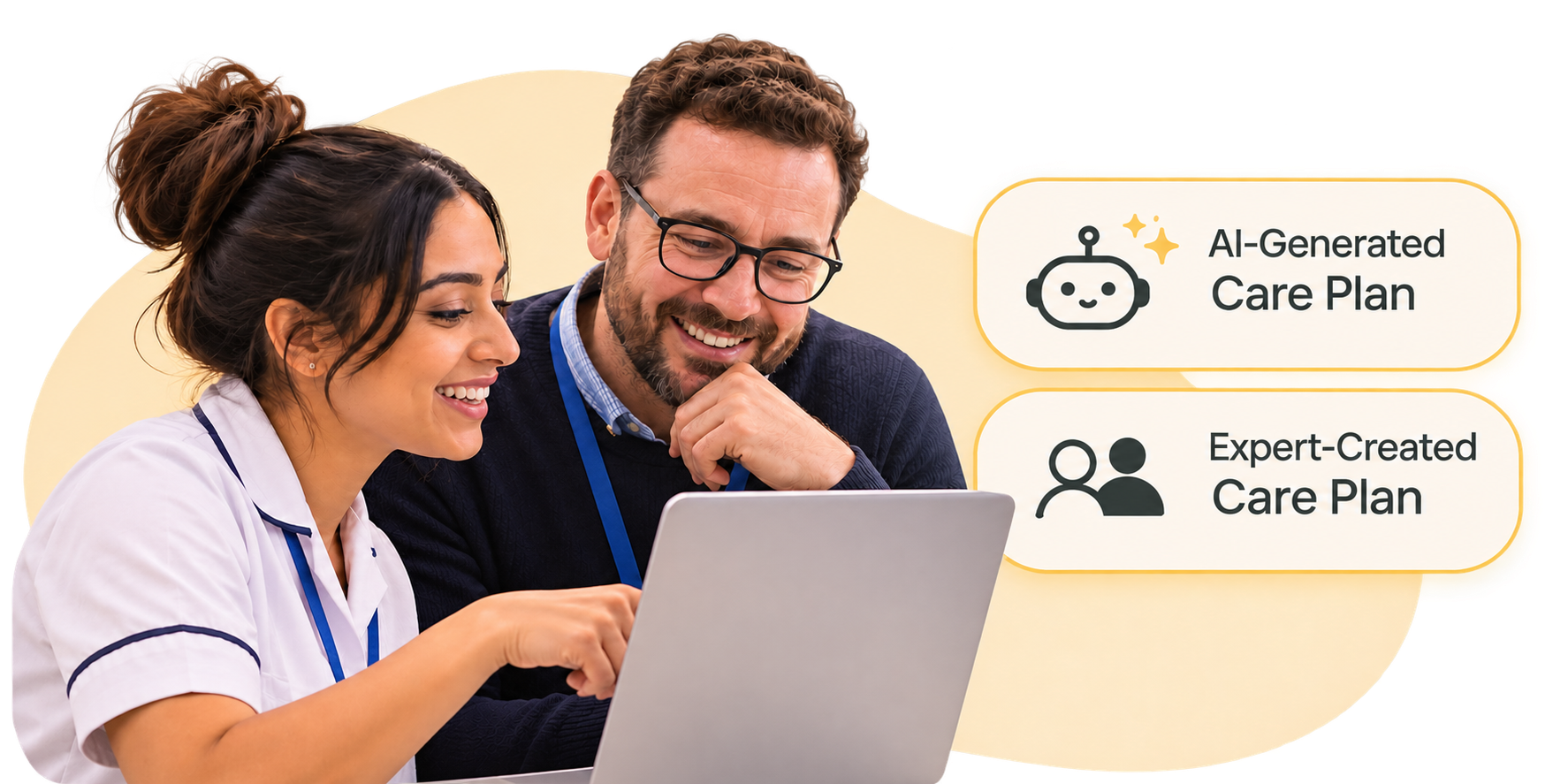
We want to understand how AI-assisted care plans compare with those written by care professionals, and what the findings could mean for the future of care.

We're inviting eligible care workers, nurses, social workers, care managers, clinicians and anyone involved in care planning to contribute their professional judgement to the research.
Get started
Arrow icon, to indicate this takes you somewhere on click

Why we're undertaking this research

Care planning is central to safe, effective and person-centred care.

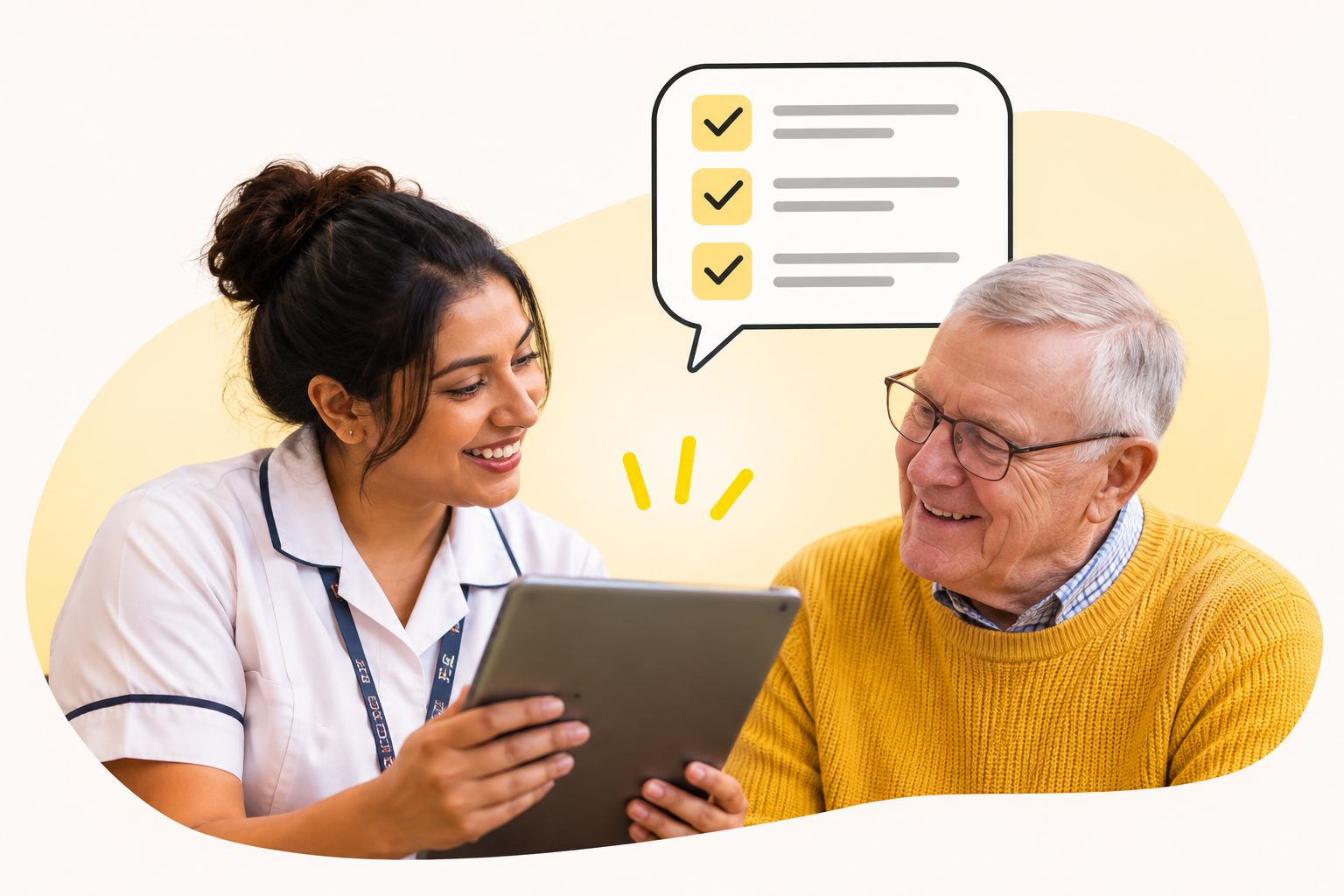
A good care plan should go beyond documenting needs, reflecting the individual's circumstances, preferences and the support they need to live well.

But producing and maintaining high-quality care plans takes time. Our research indicates that care professionals spend between 16 and 20 hours each week on manual administration and compliance tasks.

With ongoing workforce pressures, AI could help reduce this burden while supporting high standards of care.

‍But potential is not proof.

‍
Before AI becomes more widely adopted in care planning, we need evidence of its quality, limitations and ability to support professional judgement.

That's exactly what this study aims to investigate.

‍We're not setting out to prove that AI is better.

We're setting out to find out.

What is the AI care planning research study?

Our research compares care plans produced using different approaches, including those written by care professionals and those generated using AI.

Care workers and clinicians participating in the study will assess the plans without being told how each one was produced. Their assessments will help us investigate whether AI-assisted care planning can deliver improvements in two central areas:

How does the study work?

Care plans are prepared

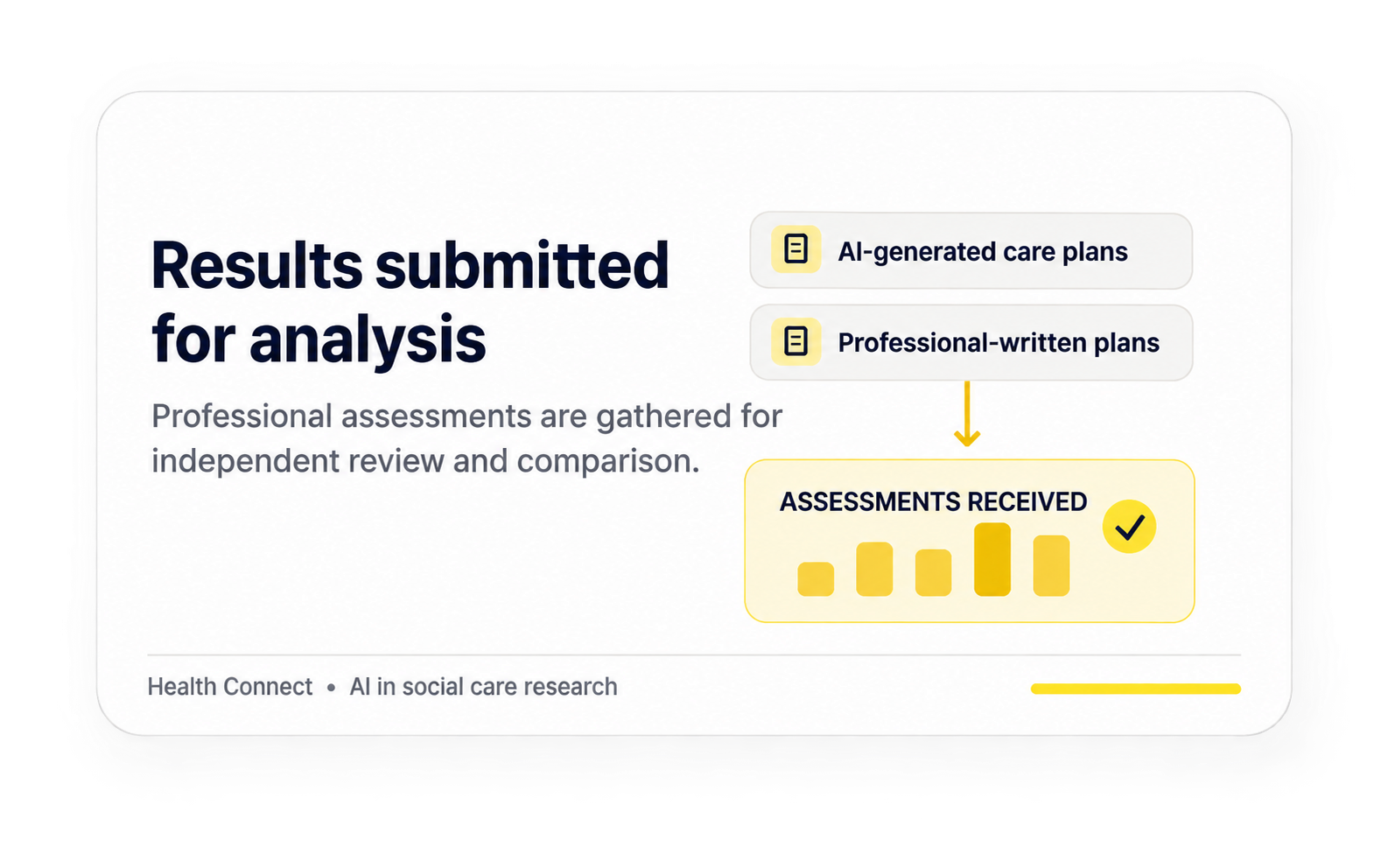
Care plans are produced using different approaches, including professional-written and AI-generated plans.

Professionals review the plans

Participating care professionals and clinicians are presented with plans without being told which approach was used to produce them.

Each plan is assessed

Participants use their professional experience and a structured assessment framework to evaluate person-centredness, quality and usefulness.

The findings are analysed

The assessments contribute to the wider research, helping identify how the approaches compare and where AI may offer benefits or present limitations. The study is described as triple-blind, with procedures designed to reduce bias. Further details about the blinding and evaluation methodology will be made available in the study protocol.
That actually helps them care.

Why independent scrutiny matters

AI is developing rapidly, but decisions about its use in care must be guided by evidence, professional expertise and independent scrutiny, not technology claims alone.

That's why we've brought together an Independent Expert Panel of 16 national specialists, with expertise spanning social care, NHS leadership, psychiatry, academic research, workforce development and regulatory governance.

The panel will help scrutinise the research approach and findings, bringing different perspectives to the evaluation.

Our aim is to explore AI's potential in care planning while ensuring professional judgement and person-centred care remain at the heart of it.
Sign me Up
Arrow icon, to indicate this takes you somewhere on click