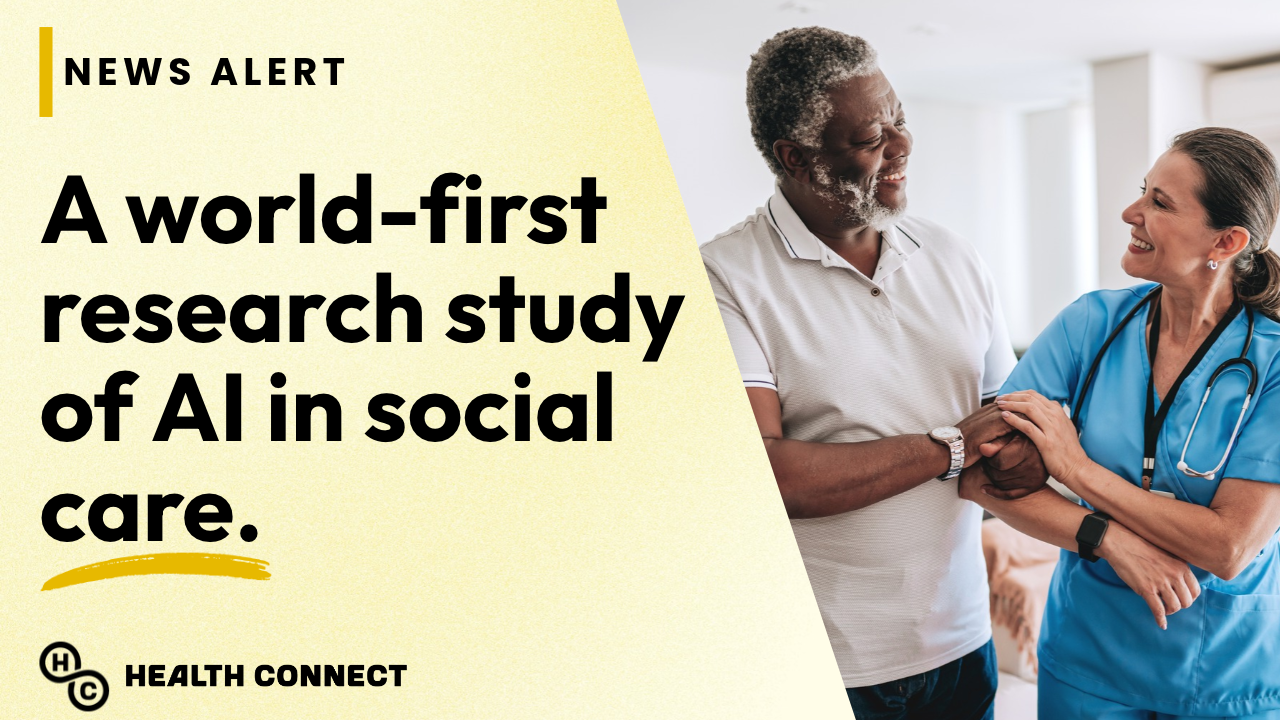
We're launching a world-first study to put AI in social care to the test
We're inviting thousands of care workers and clinicians across the UK to help investigate whether AI can improve the quality and person-centredness of care planning.
At Health Connect, we believe the future of AI in social care must be shaped by evidence, professional judgement and the people who understand care best.
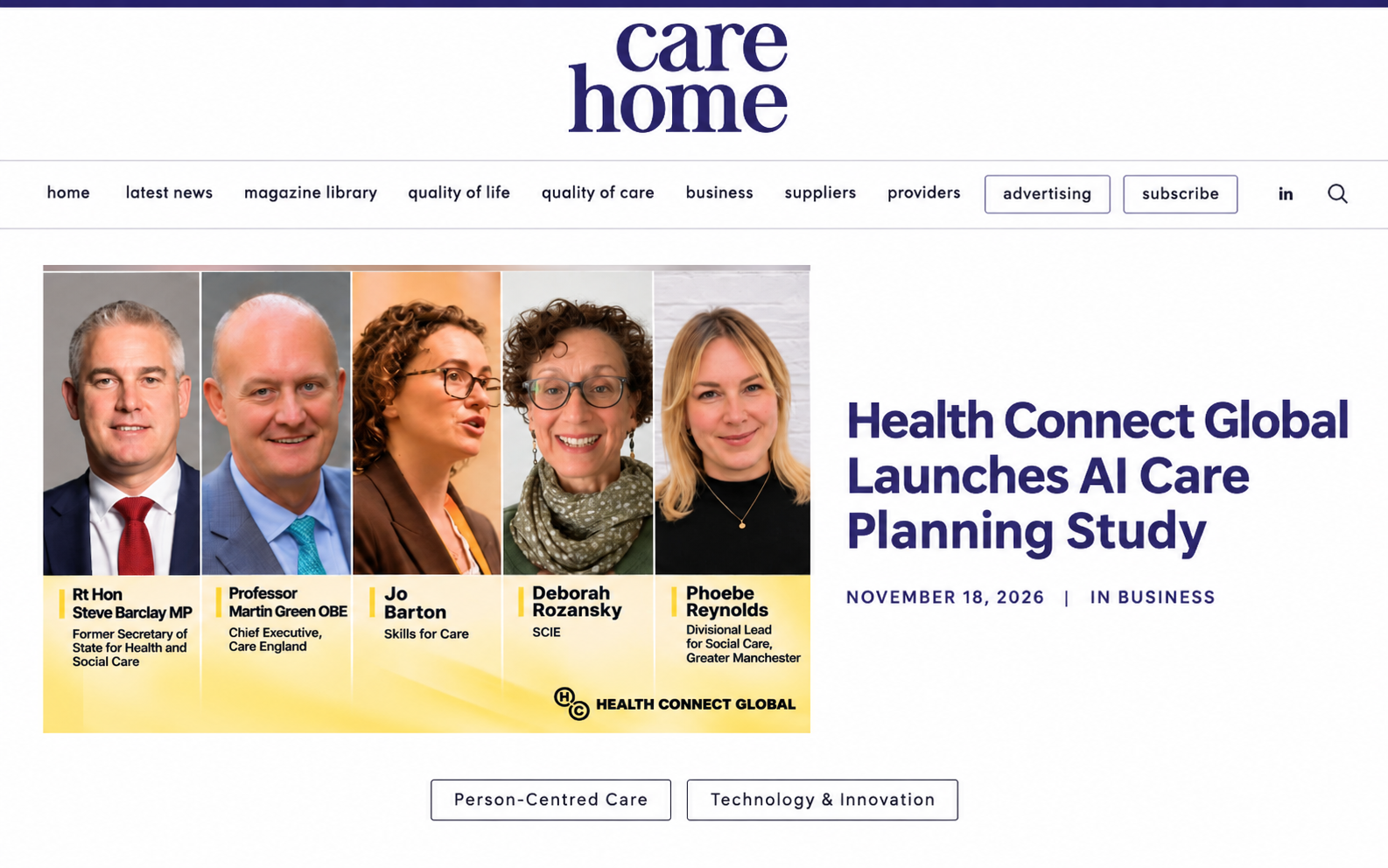
That's why we're launching what we believe to be the world's first triple-blind study of AI-assisted care planning, bringing together frontline professionals and an Independent Expert Panel of 16 national leaders to put the technology to the test.
Our ambition is simple: to understand whether AI can genuinely improve care planning, not just make it faster.
Through this research, we'll examine how AI-assisted care plans compare with plans written by care professionals, focusing on person-centredness and overall quality.
And we're inviting care professionals across the UK to help us find the answers.
Why we're putting AI to the test
Care planning is fundamental to delivering safe, effective and person-centred care. A good care plan should reflect an individual's needs, preferences and circumstances, providing clear guidance to the professionals responsible for supporting them.
But creating and maintaining high-quality care plans takes time.
Our research indicates that social care professionals can spend between 16 and 20 hours each week on manual administration and compliance tasks. With workforce pressures continuing across the sector, there is growing interest in how technology could reduce administrative demands without compromising the quality of care.
We believe AI has the potential to help. But potential isn't proof.
Before AI becomes more widely embedded in care planning, we need meaningful evidence that it can support professionals, protect individual needs and maintain the standards that people receiving care deserve.
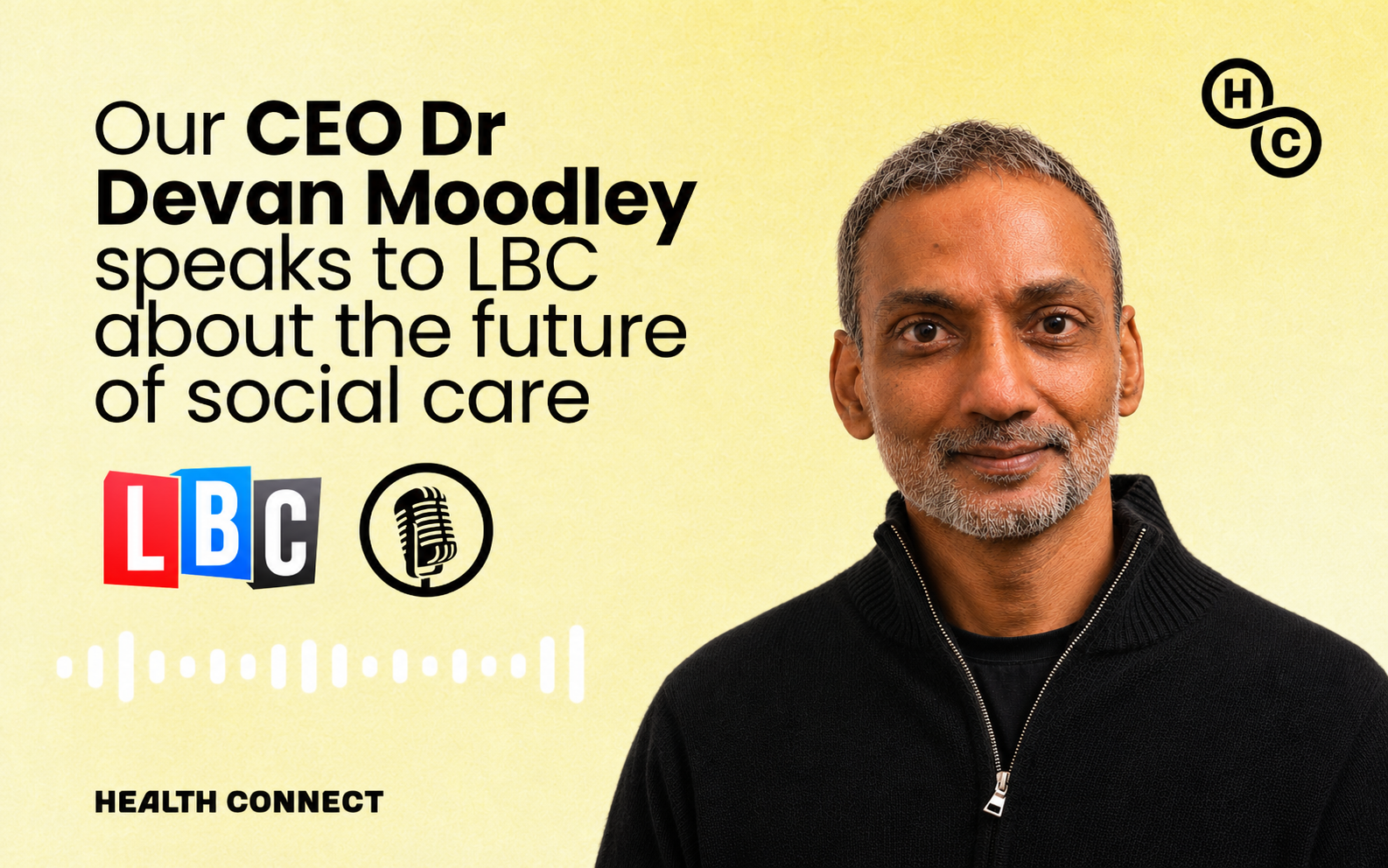
As Devan Moodley, CEO and Founder of Health Connect Global, explains:
"We need to have AI that is properly tested and trusted in care. That is why we have opened our tool up to blind testing by care workers across the country.
"The breadth and pedigree of the volunteer panel overseeing this is in itself extraordinary and sets an example of the type of collaboration that is needed to improve care safely at scale.
"I would urge every care worker and clinician who can spare 10 to 15 minutes to take part and give us their honest verdict."
How the research study works
We're inviting care workers and clinicians from across the UK to take part in a blinded assessment of care plans.
Participants will review a selection of care plans produced using different approaches, including plans written by care professionals and plans generated using AI.
They won't be told which approach was used to produce each plan.
Instead, they'll use their professional experience and a structured assessment framework to evaluate the plans against key criteria:
- Person-centredness: Does the care plan reflect the individual's unique needs, preferences and circumstances?
- Clarity and usefulness: Does the plan provide clear, practical guidance that could support safe and effective care?
The wider study will also examine efficiency, including the time needed to produce high-quality care plans.
By assessing the plans without knowing how they were produced, participants can help us build a clearer picture of AI's strengths, limitations and potential role in care planning.
Importantly, this isn't about replacing care professionals with AI. It's about understanding whether AI can become a valuable tool that supports professional judgement and helps care teams spend more time focused on people.
Keeping people at the heart of care planning
Although technology is at the centre of this research, our focus remains firmly on the people who receive care and the professionals who support them.
A care plan is much more than a clinical or administrative document. It should reflect someone's life, circumstances, preferences, risks and aspirations.
Any technology used to support care planning must therefore be assessed not only for speed, but for its ability to preserve the individuality and dignity of the person receiving care.
Phoebe Reynolds, Co-Chair of the Independent Expert Panel, said:
"Every care plan describes a person, including their history, their preferences, and the support they need to live well.
"Any technology that helps write those plans has to earn the trust of the professionals who use it and the people it describes.
"The panel's role is to make sure this study is fair, ethical, and held to a standard that regulators and the sector can rely on. Its findings will only be as strong as the judgement of the care workers who take part, so I hope as many as possible will add their voice."
Help shape the future of AI in social care
We want this research to reflect the knowledge and experience of those working across the sector.
That's why we're inviting care workers, nurses, clinicians, social workers, care managers and other eligible health and social care professionals across the UK to contribute.
Taking part is expected to take just 10-15 minutes.
Whether AI-assisted care plans perform better, worse or similarly to those written by professionals, your assessment will help us better understand the role AI could play in the future of care.
We believe that decisions about the use of AI in social care should be informed by transparent evidence, independent scrutiny and the professional expertise of those delivering care every day.
The future of AI in social care should be shaped by the people who deliver care.
We'd like you to be part of it.
Take part in the research study