
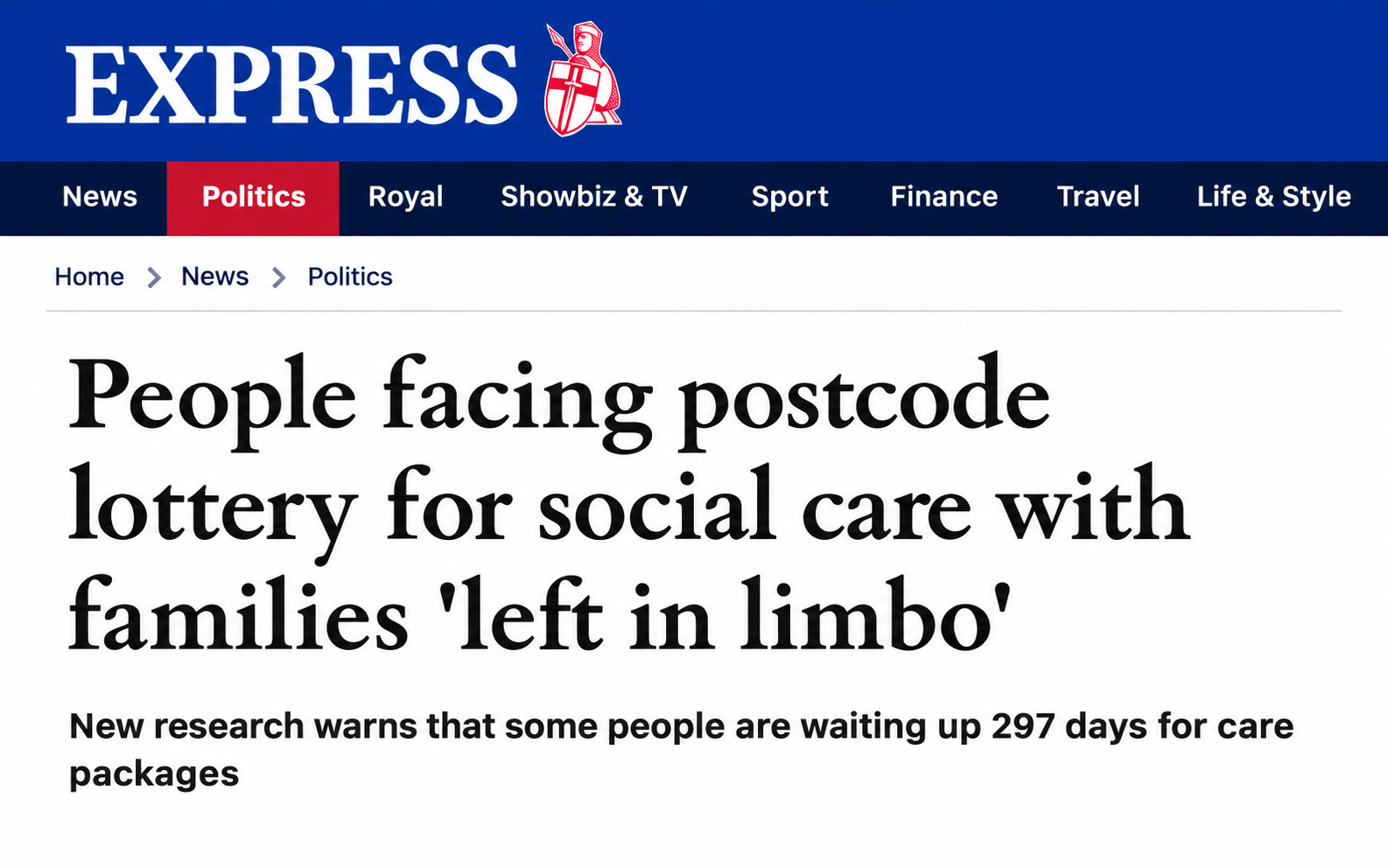
The Daily Express has published findings from Health Connect Global's national research into the future of social care, revealing substantial geographical inequalities in access to care and growing public anxiety about relying on the system.
The research, commissioned by Health Connect Global as part of its Future of Care report, combines Freedom of Information data from local authorities with national public opinion research conducted by Stack Data Strategy.
The social care postcode lottery
Freedom of Information research involving 175 local authorities in England revealed substantial variation in the time taken to arrange care packages, depending on where people live.
Key findings reported by the Daily Express include:
- Waiting times for care packages ranging from just one day to 297 days.
- An average waiting time of 29 days for in-home support.
- Almost three-quarters of the public concerned about needing social care in the future.
- Concern rising to 85% among those with experience of the social care system.
The findings raise fundamental questions about geographical equity, consistency of provision and the ability of the existing system to meet the needs of an ageing population.
Public confidence and experience of social care
One of the most significant findings was the relationship between experience of the social care system and anxiety about needing care in the future.
Rather than providing reassurance, greater familiarity with the system was associated with increased concern about relying on it.
Speaking to the Daily Express, Dr Devan Moodley, founder and CEO of Health Connect Global, said:
“These figures reveal something uncomfortable, which is that the more people see of our care system, the more they fear needing it themselves.
“Behind the statistics are families left in limbo, waiting months for essential support while others in different postcodes receive help within days.
“While the challenges facing social care are significant, the incredible work being done by care workers and social care providers in communities means that despite these barriers, people are receiving outstanding care against the odds.”
Modernising the infrastructure of social care
Dr Moodley called on the Government to rebuild public trust through investment in modern technology, equipping care professionals with appropriate digital tools and ensuring local authorities have the resources required to support an ageing population.
The Daily Express also reported responses from Alison Bennett, Liberal Democrat spokesperson for care and carers, and placed the research within the wider national debate surrounding Baroness Louise Casey's independent commission on adult social care.
The coverage brought Health Connect Global's research into the national policy discussion concerning access to care, public confidence, workforce pressures and long-term reform.
Research methodology
The research brought together two complementary sources of evidence:
- Freedom of Information research involving 175 local authorities in England, examining waiting times for care provision.
- National public opinion polling conducted by Stack Data Strategy in December 2025, involving 1,500 members of the public.
By examining both the operational performance of the care system and the public's experience and expectations of it, the research provides insights into the challenges facing social care beyond funding alone.
The findings form part of Health Connect Global's wider Future of Care report, which examines the structural, operational and technological changes needed to improve the delivery of health and social care across the United Kingdom.